
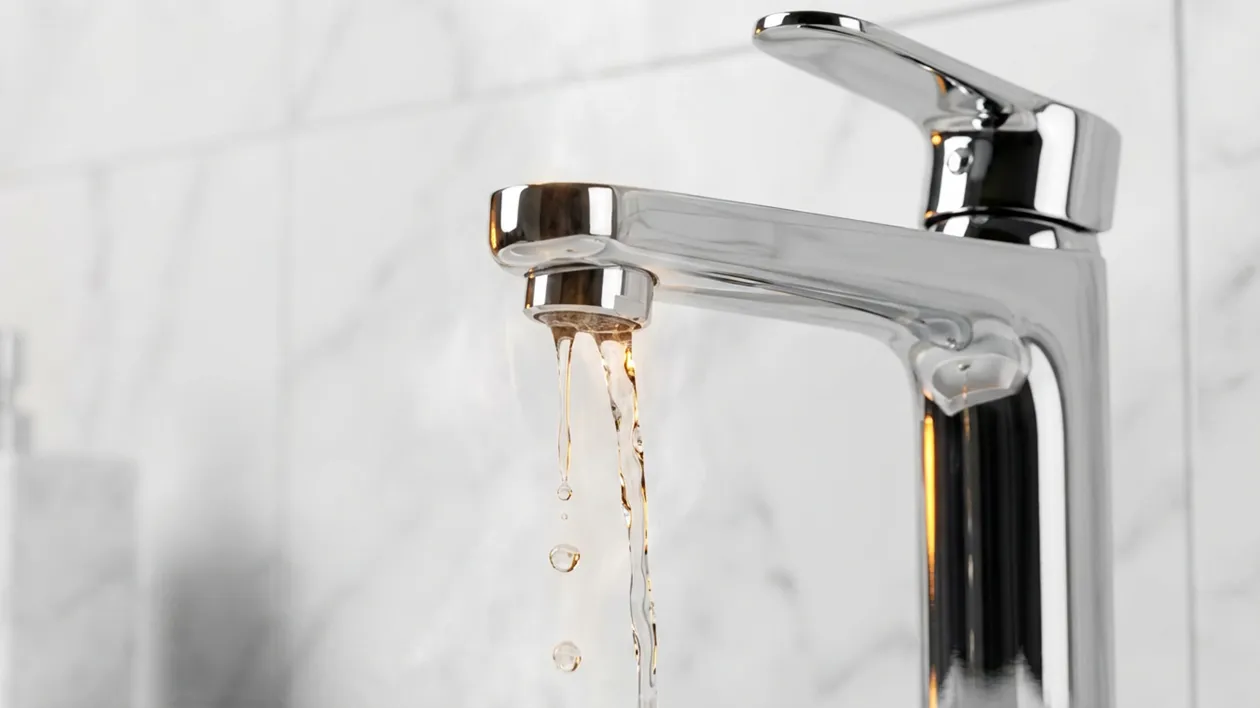
Low hot water pressure usually comes down to one of three culprits: a localised blockage at the tap or showerhead, a valve issue within your hot water system, or sediment buildup inside the tank itself. The good news? You can diagnose most causes yourself and fix quite a few without calling a plumber.
Before diving in, run a quick check. Is the pressure low at just one tap, or throughout the house? Are your neighbours experiencing the same issue? If it’s affecting everyone on your street, the problem sits with your water supplier. If it’s just you, keep reading.
The 5-Minute Fixes
When to try this: The hot water pressure is weak at one tap or shower, but fine elsewhere in the house.
If your cold water runs strong but the hot dribbles out at a single fixture, mineral buildup in the aerator or showerhead is your most likely offender. This is especially common in areas with hard water.
Cleaning an aerator or showerhead
- Unscrew the aerator from the tap spout by hand (turn anticlockwise). For showerheads, unscrew where it connects to the arm.
- Disassemble the small filter screens inside and rinse under running water.
- Soak all parts in white vinegar for 30 minutes to dissolve mineral deposits.
- Scrub gently with an old toothbrush, reassemble, and reattach.
While you’re there: Check the isolation valves beneath the basin. These small taps control water flow to individual fixtures, if one’s been bumped partially closed, your pressure suffers. Turn them fully anticlockwise to ensure they’re completely open.
The Hot Water Unit Check
When to try this: Hot water pressure is low throughout the house, but cold water runs fine everywhere.
This pattern points to something within your hot water system itself. Before calling a tradie, run through these checks.
Understanding tempering valves (critical for Australian homes)
Australian regulations require hot water to be delivered at a maximum of 50°C to prevent scalding. Your system achieves this through a tempering valve—a mixing device that blends hot water from the tank with cold water before it reaches your taps.
Here’s the problem: these valves collect debris and scale over time. When they clog, hot water flow drops while cold remains unaffected. If your symptoms match this description exactly, the tempering valve is your prime suspect.
Your inspection checklist:
- Locate the isolation valve feeding water into your heater (usually a lever or gate valve on the cold inlet pipe). Confirm it’s fully open—parallel to the pipe for lever types, or turned completely anticlockwise for gate valves.
- Inspect the pressure relief valve on the side of the tank. Look for dripping, rust stains, or mineral deposits around it. Don’t adjust this valve yourself—it’s a safety device, but visible leaks indicate it needs professional attention.
- Note your tempering valve location (typically near the hot water outlet). If hot water is sluggish everywhere but cold flows freely, this valve likely needs servicing or replacement by a licensed plumber.
Sediment and Tank Maintenance
When to try this: Your hot water has gradually slowed over months or years, or you notice discoloured water when the hot tap first runs.
Storage hot water systems accumulate sediment at the bottom of the tank—minerals, rust particles, and debris that settle out of the water over time. This buildup reduces tank efficiency and can restrict flow through outlet pipes.
Warning: This task involves hot water and potential scalding. If you’re not confident, call a professional.
Flushing your hot water tank:
- Turn off the power supply. For electric systems, switch off at the dedicated circuit breaker. For gas units, turn the control to “pilot” or off entirely.
- Let the water cool for several hours, or work carefully knowing the water remains hot.
- Connect a garden hose to the drain valve at the base of the tank. Run the hose to a suitable drainage point—a floor drain, outside drain, or garden area away from plants.
- Open the drain valve and allow water to flow until it runs clear. You may see rusty, discoloured water initially—this is the sediment flushing out.
- Close the drain valve, ensure the tank refills completely (open a hot tap inside to release air), then restore power.
Critical safety note: Never turn power back on until the tank has completely refilled. Running an electric element in an empty tank, called “dry firing”, destroys the element and can create serious safety hazards.
When to Call a Plumber
Some jobs require professional tools, licensing, or simply carry too much risk for DIY attempts.
Handle it yourself:
- Cleaning aerators and showerheads
- Checking and opening isolation valves
- Flushing sediment from the tank
- Basic visual inspections
Call a licensed plumber:
- Replacing or servicing tempering valves
- Installing pressure booster pumps
- Investigating hidden pipe leaks or corrosion
- Replacing pressure relief valves
- Hot water unit replacement
Typical costs (Australia):
- Tempering valve replacement: $250–$450 including parts and labour
- Pressure booster pump supply and installation: $800–$1,500 depending on system type
- Full hot water system replacement: $1,200–$3,500+ depending on unit type and installation complexity
Boosting Systems for Chronic Low Pressure
When to consider this: You’ve ruled out blockages and valve issues, but pressure remains inadequate, particularly in older homes or properties with gravity-fed systems.
Some homes simply don’t receive adequate mains pressure, or their internal plumbing can’t deliver sufficient flow to upper floors. In these cases, a hot water booster pump offers a permanent solution.
These compact pumps install on your hot water line and automatically activate when a tap opens, boosting pressure throughout the system. They’re particularly effective for:
- Older homes with undersized or corroded pipework
- Properties relying on gravity-fed tank systems
- Multi-storey homes where upper bathrooms suffer weak flow
- Houses at the end of long supply lines from the street
A licensed plumber can assess whether a booster pump suits your situation and recommend an appropriately sized unit. Installation typically takes a few hours and delivers immediate, noticeable improvement.
Start with the simple fixes, you might solve the problem in five minutes with a bottle of vinegar. But if you’ve worked through these steps and your hot water pressure still isn’t up to scratch, the team at True Flow Plumbing and Drains can help. We diagnose and fix low hot water pressure issues every day, from faulty tempering valves to full system replacements. Contact us today at trueflowplumbing.net.au to get your hot water flowing properly again.