
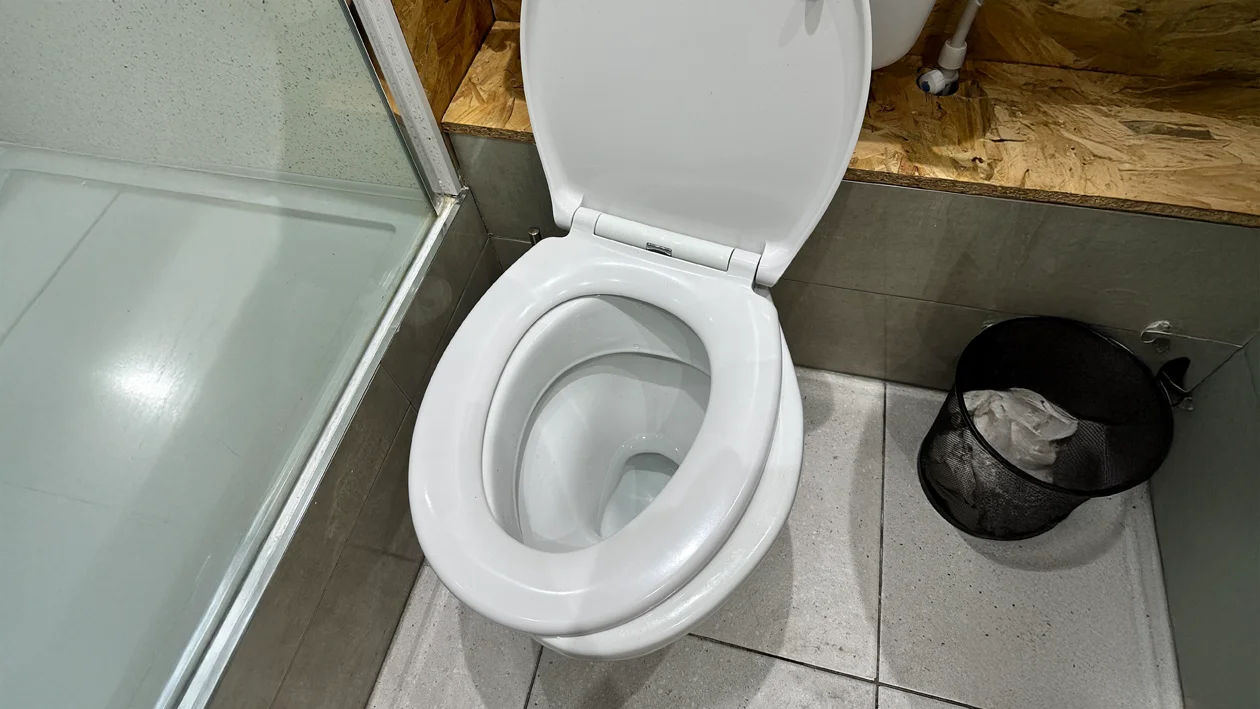
To fix a squeaking toilet seat, tighten the mounting bolts under the bowl and lubricate the hinge pins with white lithium grease or silicone spray. If your toilet makes a high-pitched whining or hissing sound from inside the tank, the fill valve likely needs cleaning or replacement. Avoid using standard WD-40 on ceramic or inside the tank.
Is It the Seat or the Tank?
Before grabbing any tools, you need to identify where the noise is actually coming from. Homeowners often confuse seat squeaks with tank hisses—and they require completely different fixes.
If the noise happens when you sit or move: It’s the seat hinge. You’re dealing with plastic-on-plastic friction or loose bolts.
If the noise happens after you flush: It’s the fill valve. That whining, whistling, or hissing comes from air or debris in the pipes.
| Sound | Timing | The Culprit | Urgency |
|---|---|---|---|
| Creak/Squeak | When sitting or shifting weight | Seat hinge or loose bolts | Low (Annoyance) |
| Whine/Squeal | During refill after flush | Fill valve diaphragm | Medium (Maintenance) |
| Hissing | Constant or after flush | Water leaking into bowl | High (Increased water bill) |
Stopping Seat Squeaks and Creaks
This fix addresses the most common cause, plastic-on-plastic friction from loose fittings or dry hinges.
You’ll need:
- Flathead screwdriver
- Adjustable wrench
- Silicone spray or white lithium grease
Step 1: Locate the covers. Pop open the plastic hinge covers at the back of the seat. These usually flip up or snap off.
Step 2: The tightening check. Use the screwdriver to hold the bolt steady while tightening the nut underneath with the wrench. Even brand-new seats creak if these bolts are slightly loose.
Step 3: The lubrication point. Spray a small amount of silicone lubricant directly into the hinge gap where the plastic components move against each other.
Step 4: The dampener hack. If your seat bangs against the bowl rim, apply small adhesive rubber bumpers to the underside. This stops impact noise and protects the porcelain.
Try this now: Don’t have silicone spray? For a temporary fix, apply a tiny dab of petroleum jelly (Vaseline) on the hinge pin. It’s safe for plastic and stops squeaking immediately.
Can You Use WD-40 on a Toilet?
Standard WD-40 is a solvent, not a long-term lubricant. It dries out plastic components and attracts dust. While it’s generally safe on porcelain, it creates unnecessary mess and won’t provide lasting results.
Do not spray:
- Inside the toilet tank (damages rubber seals)
- On the fill valve diaphragm
OK to spray:
- Rusted metal bolts (to loosen them for removal)
Better alternatives:
- For plastic hinges: Silicone spray or Teflon lubricant
- For cleaning: Mild soap and water (avoid harsh chemicals or vinegar on metal hinges—they cause rust)
- For porcelain stains: Magic Erasers work well, though they won’t stop squeaks
How to Fix a Whistling or Hissing Toilet Valve
That high-pitched squeal or constant hissing isn’t air trapped in your pipes. It’s water being restricted by debris in the valve or a worn-out washer.
The 3-minute fill valve flush:
- Turn off the water supply valve behind the toilet.
- Remove the cap from the fill valve inside the tank.
- Hold a cup over the open valve to catch spray.
- Turn the water on slightly for 5 seconds to flush out debris.
- Reassemble the cap.
If flushing doesn’t work: The valve itself is damaged and needs replacing. A generic Fluidmaster replacement valve costs around $20 from Bunnings and takes about 10 minutes to install.
What to Know Before Replacing a Toilet Seat
If tightening and lubricating hasn’t solved the problem, or your seat is visibly worn, replacement might be your best option.
Why new seats sometimes creak: Quick-release mechanisms that aren’t fully locked down are the usual culprit. Always double-check the locking tabs after installation.
The “never loosen” solution: Look for toilet seats with STA-TITE or top-fix fastening systems. These use snap-off nuts that prevent over-tightening or under-tightening, keeping everything secure long-term.
Expected lifespan: A standard plastic seat typically lasts 5–7 years before the material becomes brittle or discoloured. If yours is approaching that age and squeaking despite your best efforts, it’s time for an upgrade.
Need a Hand? Call True Flow Plumbing and Drains
Some toilet problems go beyond a simple DIY fix. If you’ve tried tightening, lubricating, and flushing the valve but the noise persists, or you’ve discovered a leak, cracked cistern, have a blocked toilet, or faulty flush mechanism, it’s time to call in a licensed plumber.
True Flow Plumbing and Drains handles all toilet repairs, from squeaky fill valves to complete replacements. We’ll diagnose the issue quickly, explain your options upfront, and get the job done right the first time.
Contact True Flow Plumbing and Drains today for fast, reliable service across your local area.