


We Charge Per Job, Not Per Hour
No surprises, no stress. You’ll know exactly what your plumbing project costs before we start. Our upfront, per-job pricing means you can make an informed decision without worrying about a ticking clock. That’s our promise to every customer.

Same Day Service
Plumbing problems don’t wait, and neither should you. We prioritise punctuality because we respect your time, when we say we’ll be there, we’ll be there. Most jobs across the Central Coast are attended same day.

Lifetime Labour Guarantee
Every job we complete is backed by our Lifetime Labour Guarantee. If something isn’t right, we’ll come back and fix it at no extra cost. It’s a promise we’ve kept since 2018, and one we’re proud to stand behind.
What Is a Gas Bayonet and Why Would You Need One?
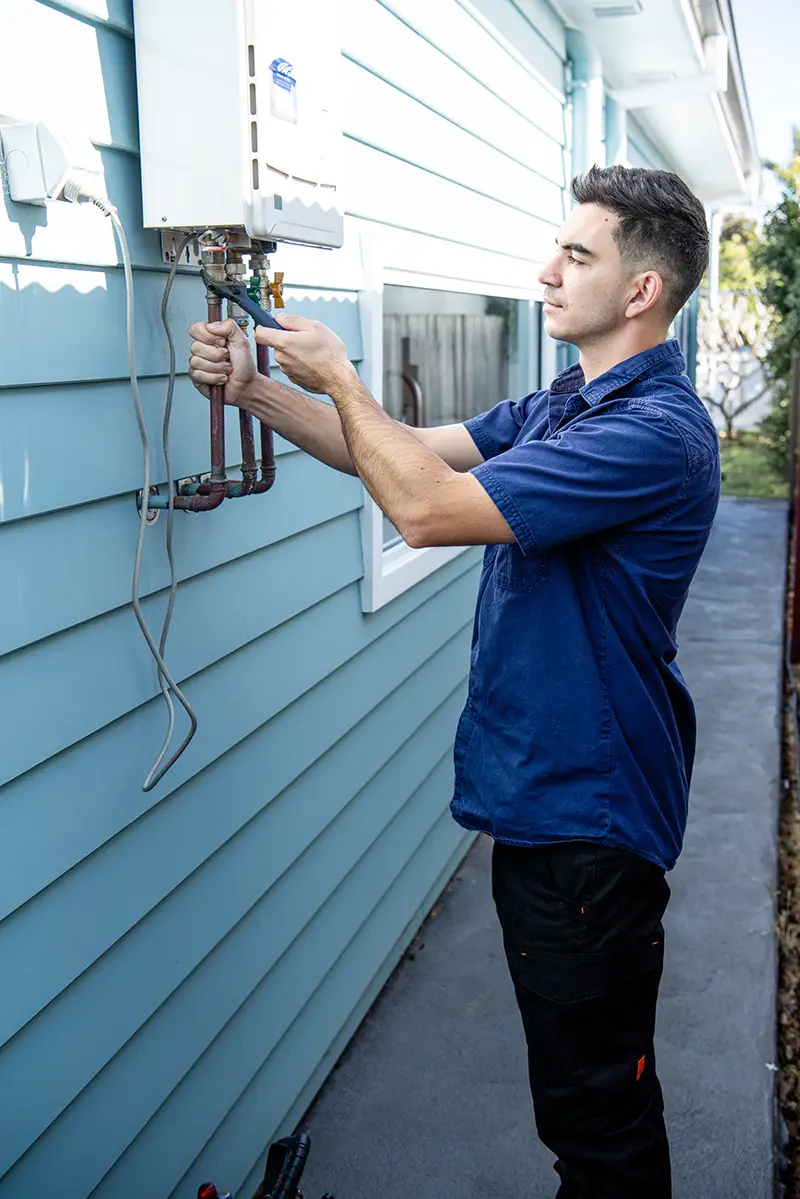
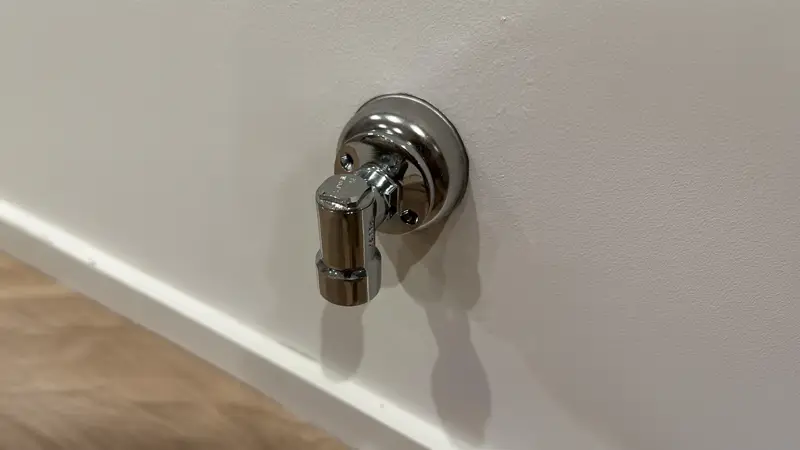
A gas bayonet is a wall-mounted or floor-mounted fitting that lets you connect and disconnect gas appliances quickly and safely. It works through a two-part system: a female socket fixed to your gas supply line, and a male plug attached to your appliance’s gas hose. Push the plug into the socket, twist to lock, and your appliance has a secure, leak-free gas connection. You’ll need a gas bayonet point installed if you’re:
- Setting up a new gas heater in your living room, bedroom, or rumpus room
- Running a gas connection to your outdoor entertaining area for a BBQ
- Replacing an electric heater with a more economical gas appliance
- Renovating your kitchen or alfresco and adding a gas cooktop or pizza oven
- Moving a gas heater to a different room and need the bayonet relocated
Gas heating typically costs 30 – 50% less to run than equivalent electric heating on the Central Coast, where winter temperatures in suburbs like Ourimbah and Somersby can drop into single digits. A properly installed bayonet point is the first step to switching over.
Indoor and Outdoor Gas Bayonet Installation
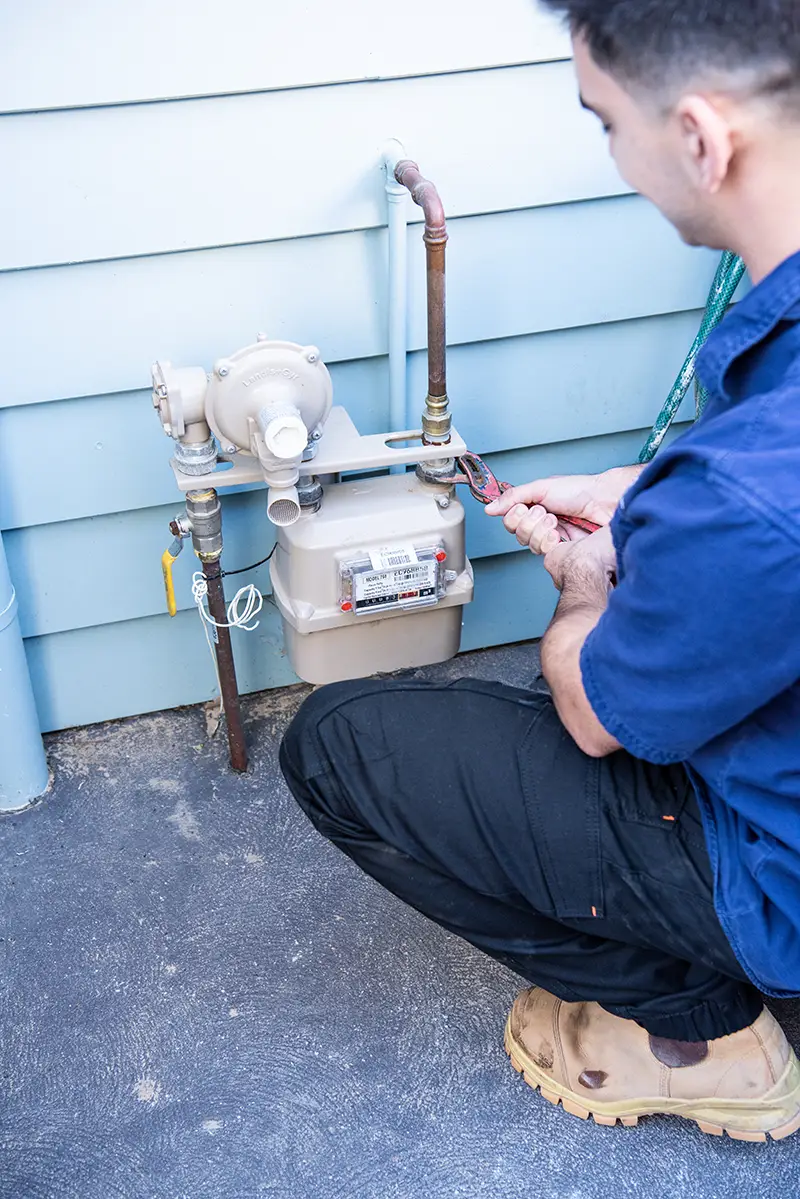
What to Expect When You Book a Gas Bayonet Installation
- Call or request a quote. Ring Dylan, your local licensed gas fitter, on 0411 438 760 or fill in the online form. Let him know where you want the bayonet installed and what appliance you’re connecting. He’ll give you an upfront price over the phone for straightforward jobs, or arrange a quick site visit if the run is more complex.
- Arrive on time, ready to work. Dylan turns up when he says he will, with all the materials and fittings on the van. No waiting around for parts.
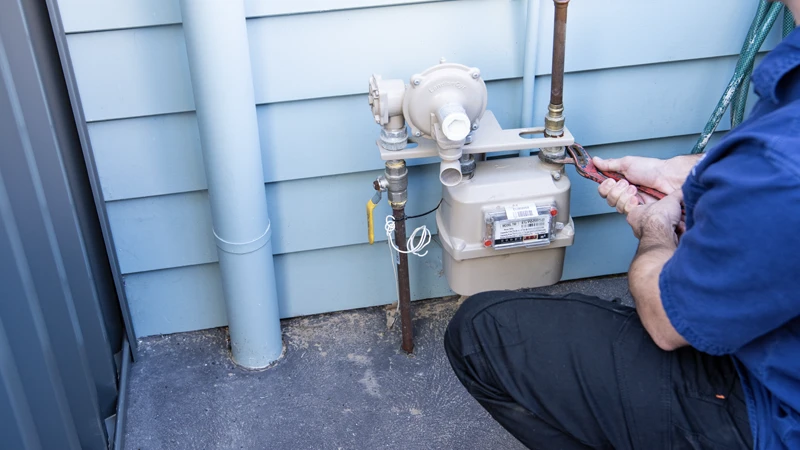
- Install and test. The gas line is run from your meter to the bayonet location. Every join is pressure-tested for leaks. The bayonet socket is fitted, and your appliance is connected and test-fired.
- Certificate of Compliance. You receive a Certificate of Compliance on the spot, confirming the installation meets AS/NZS 5601 and NSW regulations. This certificate is your proof of legal, safe work, keep it with your home records.
- Lifetime Labour Guarantee. If anything goes wrong with the workmanship down the track, Dylan comes back and fixes it at no cost to you. That’s not a 12-month promise, it’s a lifetime one.
Gas Bayonet Installation Cost on the Central Coast
Gas bayonet installations with TrueFlow Plumbing start from $200 for a straightforward single-point installation where an existing gas line is nearby. Final pricing depends on:
- The length of new gas pipe required from the meter to the bayonet location
- Whether the installation is indoor or outdoor (outdoor requires weather-rated fittings)
- Wall or floor type, brick, timber frame, or concrete slab all affect installation time
- Whether you need a new gas line run or the bayonet is branching off an existing line
Dylan quotes every job upfront before starting, per job, not per hour. The price you’re quoted is the price you pay. No surprise charges, no call-out fees added after the fact.
Get Your Gas Bayonet Installed — Call Dylan Today
Ready to add a gas point for your heater, BBQ, or outdoor kitchen? Dylan services the entire Central Coast Council region including Berkeley Vale, Gosford, Terrigal, The Entrance, Bateau Bay, Erina, Woy Woy, Toukley, Tuggerah, Blue Haven, Umina Beach, and surrounding suburbs. He can usually fit your installation within a few days of calling, same-day for urgent jobs.

Frequently Asked Questions
Can I install a gas bayonet myself in NSW?
No. Gas bayonet installation is classified as restricted gas fitting work in NSW under the Gas and Electricity (Consumer Safety) Act 2017. Only a licenced gas fitter can legally install, modify, or relocate gas bayonet points. Unlicensed gas work carries penalties up to $55,000 for individuals and voids your home insurance coverage. Call Dylan on 0411 438 760 for a safe, compliant installation backed by a Lifetime Labour Guarantee.
How long does it take to install a gas bayonet?
A standard gas bayonet installation takes 1–2 hours for a single point where an existing gas line runs nearby. More complex installations — such as running a new gas line from the meter through to the opposite side of the house, may take 2–4 hours. Dylan will give you an accurate time estimate when he quotes the job.
What’s the difference between a gas bayonet and a gas point?
They’re the same thing. “Gas bayonet,” “gas bayonet point,” and “gas point” all refer to the wall-mounted or floor-mounted fitting that provides a quick-connect outlet for gas appliances. The fitting uses a bayonet-style locking mechanism, push in and twist to lock, similar to a light bulb socket, which is where the name comes from.
Can I connect a BBQ to a gas bayonet?
Yes. Outdoor gas bayonet points are one of the most popular installations on the Central Coast. Once Dylan installs the bayonet, you connect your BBQ using a bayonet hose with a male fitting on one end and the appropriate connection for your barbecue on the other. Most Weber, Beefeater, and Ziegler & Brown BBQs sold in Australia come with bayonet-compatible hose options. Running your BBQ off mains gas means you’ll never run out mid-cook like you can with bottled gas.
Do I need a gas bayonet for a gas heater?
Most freestanding and portable gas heaters require a bayonet connection. If your home already has a gas bayonet point in the room, you can simply connect the heater’s hose to the existing socket. If there’s no bayonet in the room where you want the heater, Dylan can install one — typically in 1–2 hours. Permanently flued gas heaters use a different connection method and are hardwired into the gas line rather than using a bayonet.
Does TrueFlow install bayonets for natural gas and LPG?
Yes. Dylan installs gas bayonet points for both natural gas (Jemena mains supply) and LPG (bottled or tank) systems. The bayonet fittings are the same — the difference is in the gas line connection upstream. Many Central Coast homes in established suburbs like Gosford, Erina, and Terrigal are on the natural gas network, while properties in areas like Wamberal, Matcham, and parts of the northern corridor rely on LPG.
Will I receive a compliance certificate?
Yes. Every gas bayonet installation by TrueFlow Plumbing includes a Certificate of Compliance issued on completion. This certificate confirms the work was carried out by a licenced gas fitter (NSW Licence 457032C) and meets the requirements of AS/NZS 5601. You should keep this certificate with your property records — it may be required for home insurance claims, property sales, or future inspections.
How much does it cost to relocate an existing gas bayonet?
Relocating a gas bayonet typically costs more than a new installation because the old point needs to be safely capped and pressure-tested in addition to running the new line. Exact pricing depends on the distance between the old and new locations and the wall construction involved.
What gas bayonet brands does TrueFlow use?
Dylan uses quality Australian-standard bayonet fittings from manufacturers like Bromic and BAS (Bayonet Australia Systems). All fittings are certified to AS 4627 and appropriate for the gas type in your home. The choice of fitting depends on whether the installation is indoor or outdoor, wall-mounted or floor-mounted, and whether you’re connecting to natural gas or LPG.