
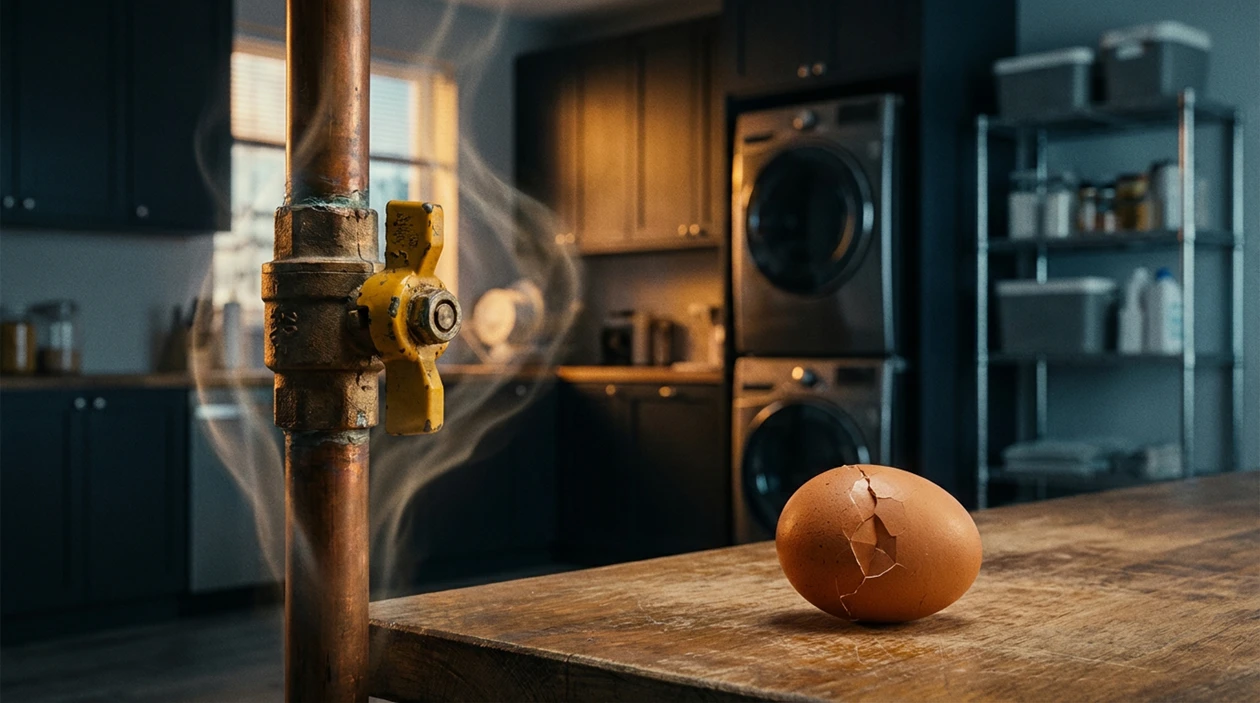
Natural gas is odourless in its pure form. However, Australian gas suppliers add a chemical called Mercaptan to make leaks detectable. This additive creates a distinctive smell similar to rotten eggs, sulfur, or a skunk.
IMMEDIATE SAFETY WARNING
If you notice a strong gas smell, hear hissing sounds, or feel unwell, leave your home immediately. Do not turn on or off any light switches. Do not use your mobile phone inside. Once you’re safely outside, call your gas supplier’s emergency line or 000. You will then be advised whether or not you need to engage an emergency plumber.
How to Tell if You Have a Gas Leak
Use this checklist to assess your situation:
Smell
- Rotten eggs
- Sulfur
- Sewage-like odour
Sound
- Hissing near gas pipes
- Whistling around appliances or connections
Sight
- Bubbles forming in standing water near pipes
- Houseplants dying unexpectedly
- Dust or dirt blowing near gas lines
- Visible damage to connection hoses or fittings
Quick Test: Stand quietly in the centre of the room. Can you hear a hissing sound? If yes, evacuate immediately.
Physical Symptoms: How Gas Affects Your Body
Gas exposure affects people differently depending on concentration and duration. Here’s what to watch for:
Mild/Early Symptoms
- Headache
- Dizziness or lightheadedness
- Eye irritation or watering
Severe Symptoms
- Nausea or vomiting
- Difficulty breathing
- Extreme fatigue
- Confusion or disorientation
The Outdoor Test: If your symptoms improve noticeably within minutes of stepping outside, you’re likely dealing with a gas or carbon monoxide issue inside your home. Do not re-enter until a professional has inspected the property.
What Smells Can Be Mistaken for Gas?
Not every unpleasant smell indicates a gas leak. Here’s how to differentiate:
| Smell Source | Characteristics | Location |
|---|---|---|
| Sewer gas | Musty, damp, or mouldy | Near blocked drains and bathrooms |
| Dead animal | Sweet, rotting odour | Localised in walls, roof cavities, or vents |
| Dry P-traps | Sewage smell | From infrequently used drains |
| Formaldehyde | Sharp chemical smell | Near new furniture, carpets, or cabinetry |
If the smell is strongest near your gas meter, stove, hot water system, or heating unit, treat it as a potential gas leak until confirmed otherwise.
How to Test for a Gas Leak Yourself (The Bubble Method)
Important: Only perform this test if the smell is faint. If the odour is strong, skip this step and evacuate immediately.
What You Need
- 1 teaspoon of dish soap
- 1 cup of water
- A sponge, brush, or spray bottle
Steps
- Mix the dish soap thoroughly with the water until sudsy.
- Apply the solution generously to gas pipe connections, joints, and valve fittings.
- Observe the area closely for 30 seconds to one minute.
- Interpret the result:
- Bubbles forming or growing = Gas leak confirmed
- No bubbles = Leak may be elsewhere or intermittent
Don’t have a gas detector? The dish soap sitting in your kitchen right now is enough to perform this test.
What To Do (and NOT Do) If You Smell Gas
Do:
- Open windows and doors quickly if it’s safe to do so
- Turn off the main gas valve at your meter if you know its location
- Evacuate everyone from the property, including pets
- Call emergency services or your gas supplier once you’re safely outside
- Wait for a licensed gas fitter to inspect before re-entering
Don’t:
- Turn light switches on or off
- Use your mobile phone inside the house
- Light matches, candles, or cigarettes
- Operate any electrical appliances
- Start your car if it’s parked in an attached garage
- Search for the leak yourself if the smell is strong
Need a Licensed Gas Fitter? We Can Help
Gas leaks require immediate professional attention, not a DIY fix. At True Flow Plumbing, our licensed gas fitters are equipped to locate leaks, repair faulty connections, and ensure your home is safe. Whether you’ve detected a faint smell or need an urgent inspection after evacuating, we’re here to help. Contact True Flow Plumbing today for fast, reliable gas fitting services across our service area. Your safety is too important to leave to chance.