
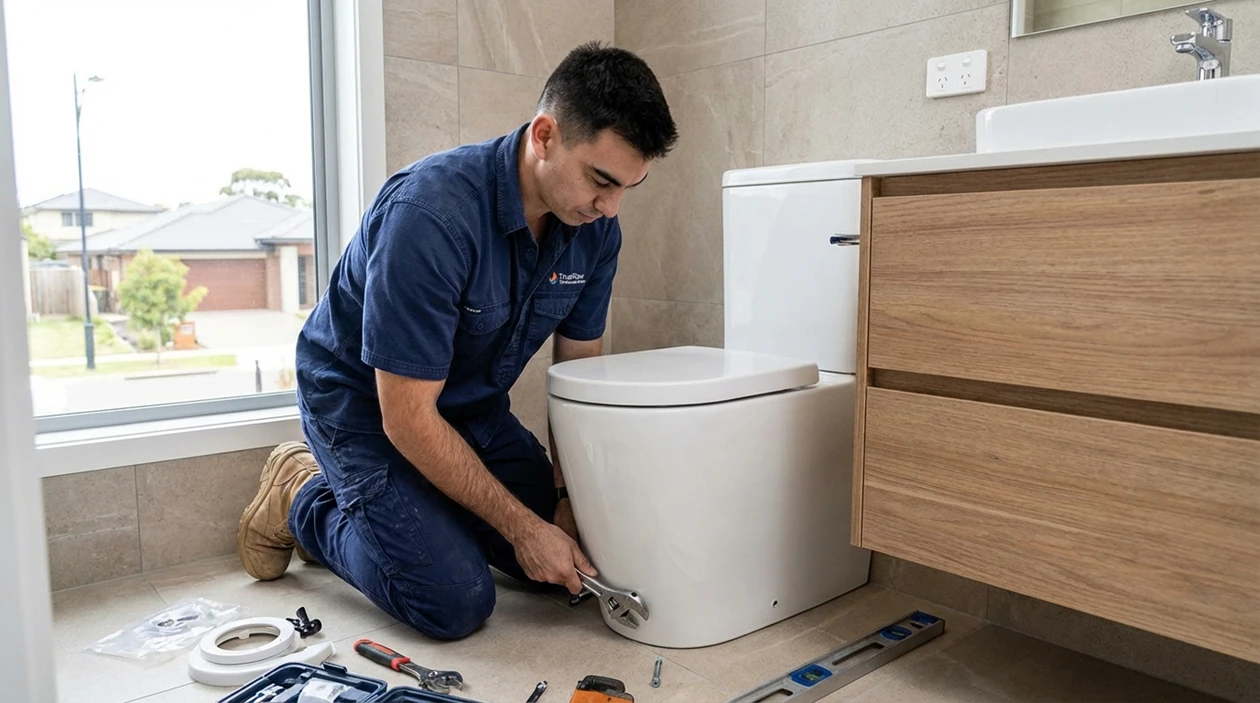
Removing cemented pans, choosing the right connector, and avoiding the “wax ring” mistake.
Searching “how to install a toilet” returns thousands of American tutorials telling you to grab a wax ring and get started. Follow that advice in Australia and you’ll end up with the wrong parts, a potential insurance headache, and a mess on your bathroom floor.
This guide covers what Australian DIYers actually need to know: the legal grey areas, the correct seal type, and how to remove those old cemented pans without destroying your tiles.
Do You Need a Plumber to Install a Toilet in Australia?
In most Australian states, plumbing work must be carried out by a licensed professional. Full stop.
However, swapping a toilet in an existing location sits in a grey area for competent DIYers—provided you’re not altering the drainage pipe layout or relocating anything.
Here’s how to decide whether to proceed or pick up the phone:
Stop and call a plumber if:
- You need to move the pipe location or change the drainage layout
- You live in a strata unit or apartment (the insurance implications aren’t worth the risk)
- You’re not confident working with basic tools and following instructions precisely
Proceed with caution if:
- You’re swapping like-for-like in a freestanding home
- The waste pipe location stays exactly where it is
- You’re comfortable with tile drilling and basic DIY
Before You Start: The Legal Reality Check
- Check your state regulations. NSW Fair Trading and the Victorian Building Authority have specific guidelines on what homeowners can and can’t do. The rules vary by state.
- Read your home insurance PDS. Some policies exclude damage caused by unlicensed plumbing work. A botched toilet installation that causes water damage could leave you seriously out of pocket.
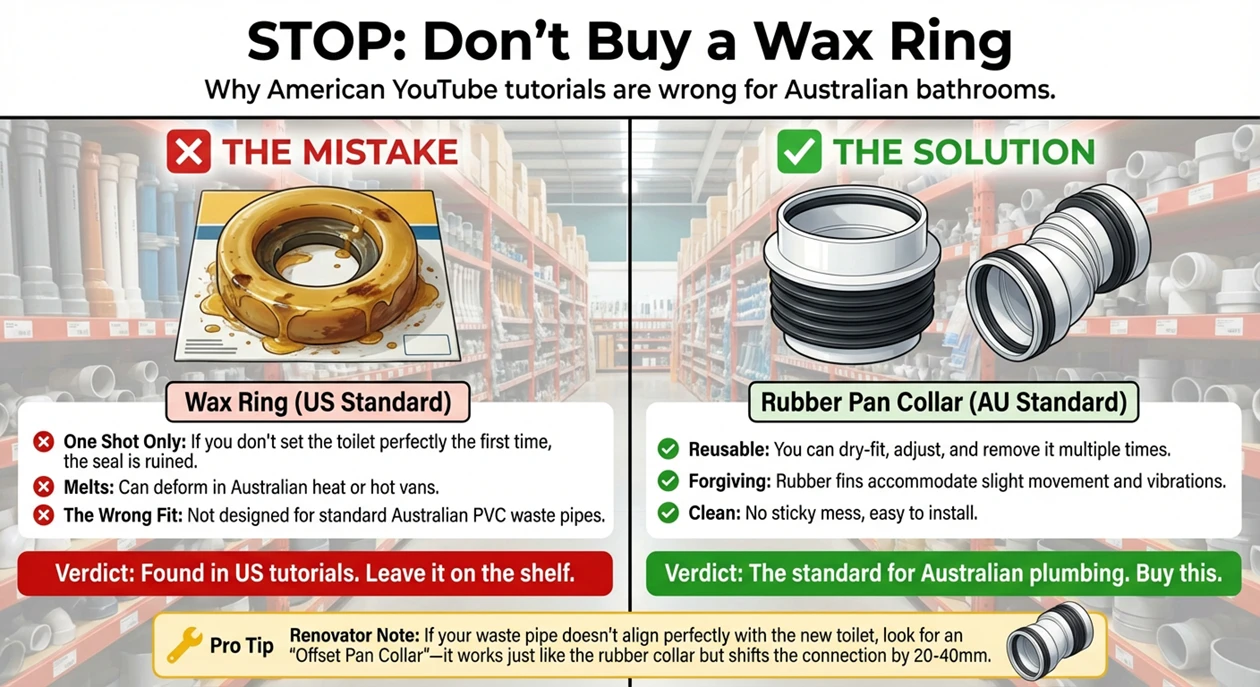
Wax Rings vs Rubber Pan Collars: What You Actually Need
If you’ve watched American YouTube tutorials, you’ve probably seen wax rings featured prominently. Here’s the thing: you almost certainly don’t need one.
Australian plumbing uses a rubber pan collar or offset connector. Wax rings are a US standard that keeps appearing in search results and confusing Australian DIYers.
Wax Ring (US Standard):
- Single use only, mess it up and you’re buying another
- Messy to work with
- Can melt or deform in hot conditions
- Not designed for Australian pipe fittings
Rubber Pan Collar (Australian Standard):
- Reusable if you need to reposition
- Flexible and forgiving of minor movement
- Cleaner installation
- Designed for Australian waste pipe sizes
When you’re at Bunnings or your local plumbing supplier, ask for a pan collar or rubber toilet connector. If someone hands you a wax ring, you’re in the wrong aisle.
How to Remove an Old Toilet Cemented to the Floor
Older Australian toilets weren’t just screwed down, they were bedded in sand and cement. You can’t simply undo a few bolts and lift them off. The pan is essentially glued to your floor.
The goal is to break the cement seal without cracking your floor tiles. Here’s how:
Step 1: Isolate and Empty
Turn off the isolation tap behind the toilet (or at the mains if there’s no isolation valve). Flush to empty the cistern, then use a sponge or old towel to soak up any remaining water in the bowl and cistern. Have a bucket and rags ready, there’s always more water than you expect.
Step 2: Disconnect
Remove the water supply line from the cistern. If your toilet has visible bolts at the base, remove these first.
Step 3: The Shock Method
Using a rubber mallet, firmly tap around the base of the pan, not the cistern or the bowl itself. You’re trying to break the cement bond between the pan and the floor. Work your way around the entire base with consistent, firm strikes.
Step 4: The Chisel Method (If the Mallet Fails)
If the mallet doesn’t free it, you’ll need a cold chisel. Position it at the cement line where the pan meets the floor and tap carefully with a hammer. Work slowly around the perimeter. The aim is to crack the cement, not your tiles.
Step 5: Lift and Remove
Once the bond is broken, rock the pan gently to confirm it’s free, then lift straight up. Old toilets are heavy—get a second pair of hands if needed.
Step 6: Clean the Floor
You’ll have cement residue left on the tiles. Scrape off what you can with a paint scraper or bolster chisel. For stubborn residue, a diluted muriatic acid solution will dissolve the cement—but wear gloves, eye protection, and ensure good ventilation. Rinse thoroughly with water afterwards.
Step-by-Step: Installing and Securing a Modern Toilet
Modern toilets are secured using floor brackets and finished with sanitary silicone. The days of cementing pans to the floor are long gone.
What You’ll Need
- New toilet (pan and cistern)
- Rubber pan collar or offset connector
- Floor mounting brackets (usually included)
- Diamond-tip drill bit (for tiles)
- Wall plugs and screws
- Sanitary silicone (not bathroom sealant—sanitary grade is mould-resistant)
- Adjustable wrench
- Spirit level
- Soapy water or lubricant
- Plastic shims or glaziers packers
Installation Checklist
1. Dry Fit First
Place the pan in position without any connections. Check that the waste outlet aligns with your floor waste pipe. Mark where the mounting holes sit on the tiles.
2. Drill Your Mounting Holes
Using a diamond-tip drill bit, drill through the tiles at your marked positions. Go slowly and use water to keep the bit cool. Insert wall plugs into the holes.
3. Connect the Cistern to the Pan
If your toilet has a separate cistern, attach it to the pan now. There’s a rubber donut washer between them—don’t overtighten the bolts or you’ll crack the porcelain. Hand tight plus a half turn with a wrench is plenty.
4. Install the Pan Collar
Fit the rubber pan collar to the waste pipe. A bit of soapy water or silicone lubricant makes this much easier. The collar should sit snugly without forcing it.
5. Position and Secure the Pan
Lower the toilet pan onto the pan collar, ensuring the outlet seats properly into the collar. Screw the pan into the floor brackets. Again, don’t overtighten—you’re securing it, not crushing it.
6. Connect the Water Supply
Attach the braided water supply hose to the cistern inlet and the isolation tap. Turn the water back on slowly and check for leaks at both connections.
7. Apply Silicone
Run a bead of sanitary silicone around the base of the toilet where it meets the floor. This prevents water and urine from seeping underneath and creating odours.
Important: Leave a small 2cm gap at the very back of the toilet without silicone. This “weep hole” lets you spot any leaks early—if water appears at the back, you know you’ve got a problem before it rots your subfloor.
Quick Fix: Stabilising a Rocking Toilet
If your toilet rocks on uneven tiles before you silicone, don’t just crank the bolts tighter. Slide plastic glaziers packers or shims under the base until it sits level and stable. Once it’s solid, apply your silicone bead over the shims to lock everything in place.
Common Installation Mistakes (And How to Fix Them)
Even straightforward toilet installations can go wrong. Here are the mistakes that catch people out:
| Mistake | What Happens | How to Fix It |
|---|---|---|
| Overtightening cistern bolts | Cracked porcelain—and a new toilet purchase | Hand tight plus half a turn with a wrench. No more. |
| Cutting the waste pipe too short | Pan collar won’t seal properly, causing leaks | Measure twice before cutting. Use an offset connector if you’ve cut too short. |
| Siliconing the entire base | Leaks hide underneath, rotting your floor undetected | Always leave a 2cm weep gap at the back |
| Using a wax ring | Poor seal, messy installation, wrong fit for Australian pipes | Use a rubber pan collar designed for Australian plumbing |
| Not checking level before securing | Toilet sits crooked, water pools in the bowl incorrectly | Always dry fit and check with a spirit level first |
When to Call a Professional
Not every job is a DIY job. If you’ve read through this guide and feel uncertain about any step, there’s no shame in calling a plumber.
The average cost for True Flow Plumbing to install a toilet you’ve already purchased sits between $250 and $450, depending on your location and the complexity of the job. We also offer toilet repair services to avoid having to pay for a brand new toilet.
Compare that to the cost of cracked floor tiles, water damage from a poor seal, or an insurance claim denied because of unlicensed work. Sometimes the professional option is the smarter investment.