


We Charge Per Job, Not Per Hour
No surprises, no stress. You’ll know exactly what your plumbing project costs before we start any work. Our upfront, per-job pricing means you can make an informed decision on your bathroom, kitchen, hot water or drainage repair without worrying about a ticking clock. That’s our promise to every customer.

Same Day Service
Plumbing problems don’t wait, and neither should you. Punctuality matters to us because we respect your time. When we say we’ll be at your property, that’s when we’ll be there. Most plumbing jobs across the Central Coast are completed the same day.

Lifetime Labour Guarantee
Every job we complete is backed by our Lifetime Labour Guarantee. If something isn’t right, we’ll come back and fix it at no extra cost. It’s a promise we’ve kept since 2018, and one we’re proud to stand behind.

Water Leak Detection on the Central Coast
I’m Dylan Attard, the licenced plumber behind TrueFlow Plumbing and Drains, and I find and repair hidden water leaks for homes and businesses right across the Central Coast. If your water bill has jumped, you can hear running water, or there’s a damp patch with no obvious source, I’ll track the leak down, show you exactly where it is, and fix it.
TrueFlow Plumbing is owner-operated, Master Plumbers Association accredited, and rated 5.0 on Google reviews. Every job is priced per job, not per hour, and backed by our Lifetime Labour Guarantee. Call Dylan on 0411 438 760 (Licence 457032C) for water leak detection on the Central Coast.
How we find a hidden water leak
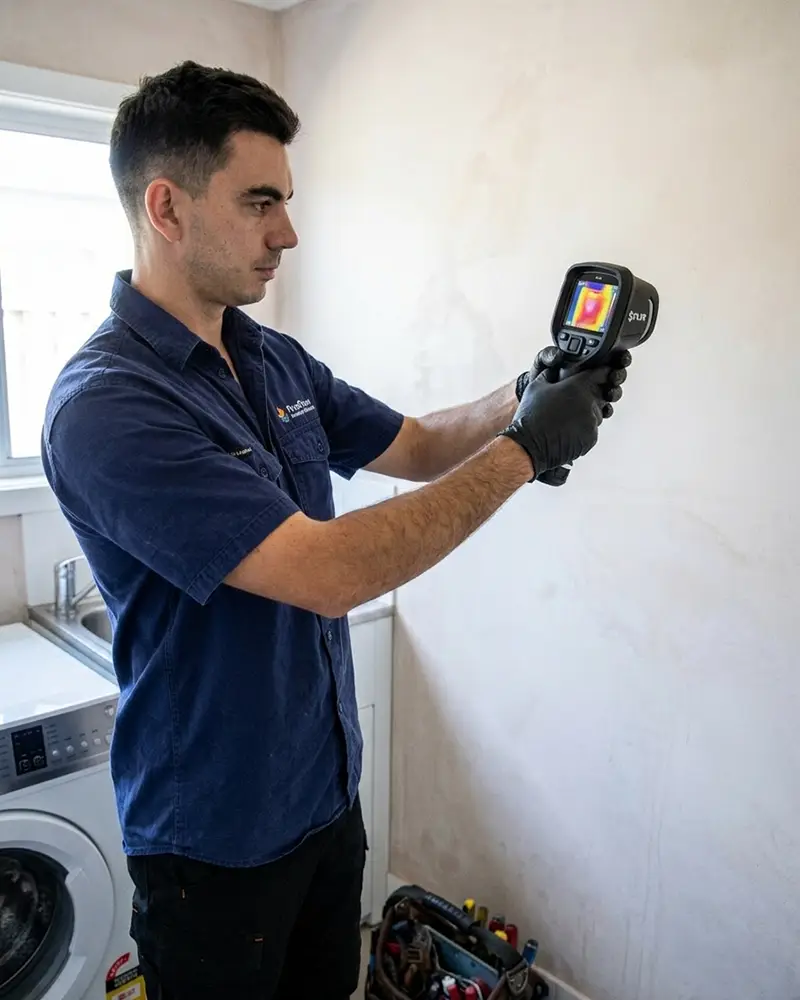
A plumber finds a hidden water leak using non-destructive equipment that locates it without tearing your home apart. At TrueFlow, I use acoustic and thermal tools to pinpoint the exact spot before any wall, floor or ground is opened, so the repair is targeted rather than guesswork.
| Method | How it works | Best for |
|---|---|---|
| Acoustic leak detection | Ground microphones and listening gear pick up the sound of water escaping a pipe | Pressurised water lines, underground and under slabs |
| Thermal imaging | A camera reads temperature differences caused by escaping water | Leaks behind walls, ceilings and under floors |
| Pressure testing | Isolating and pressurising the system shows whether and where it’s losing water | Confirming a suspected leak and narrowing the area |
| Pipe and cable locating | Traces the path of buried pipes so we search the right ground | Underground services before any excavation |
| Moisture meters | Measure damp levels in building materials | Tracing where water has travelled behind a surface |
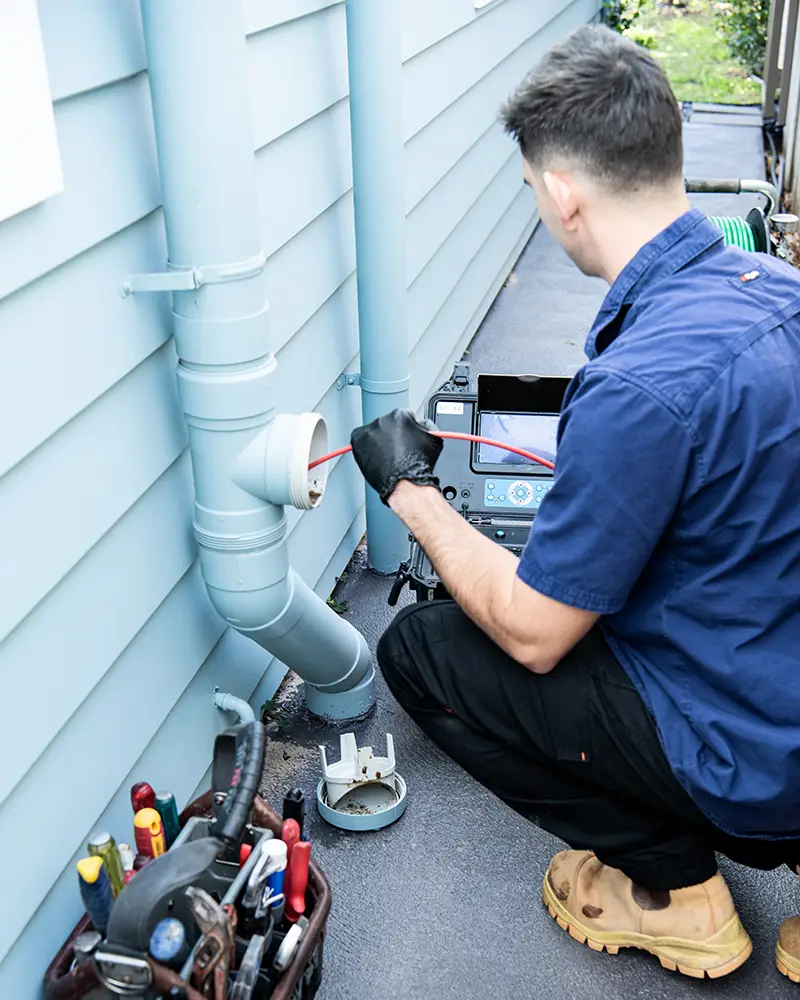
| CCTV drain camera | A camera run through the line shows cracks and breaks | Leaks and breaks in drains and sewer pipes |
Leaks behind walls, under slabs and underground
Yes, a hidden leak behind a wall, under a concrete slab or underground can be found without digging up the whole area. I locate it precisely with acoustic and thermal equipment first, so when it’s time to repair, we only open the one spot that needs it.
For a leak you can’t see, the signs do the talking: a hissing or trickling sound, warm spots on a tiled floor, a bill that keeps climbing, or damp that returns after drying. I work back from those clues with the meter and detection gear to confirm where the water is coming from. I detect and repair leaks behind walls, under slabs and underground. I don’t offer no-dig (trenchless) pipe replacement, so where an underground repair needs access, I keep the excavation as small and targeted as the pinpointing allows.
A small hidden leak rarely stays small. Left alone it can rot timber, lift flooring and start mould in a matter of weeks. If you suspect a leak, turn your water off at the mains and get it looked at quickly. The detection is almost always cheaper than the water damage.
Emergency water leak repairs on the Central Coast
TrueFlow attends emergency water leaks across the Central Coast within 1 hour, 24 hours a day. A burst pipe or a fast leak can flood a home quickly, so the moment you call, turn your water off at the mains and I’ll be on my way.
If it’s a broader after-hours plumbing emergency rather than just a leak, see our 24/7 emergency plumber service. Either way, call Dylan on 0411 438 760 and you’ll speak to the plumber who’s actually coming, not a call centre.
Frequently Asked Questions
Does home insurance cover leak detection?
Many home insurance policies in Australia cover the cost of finding a leak and the resulting water damage, but cover varies by policy and insurer, so check your product disclosure statement or ask your insurer directly. To make a claim easier, I provide the paperwork you need, including the detection findings and an itemised invoice, so you can give your insurer clear evidence of the leak and the work done.
How can I prevent a water leak?
You can’t stop every leak, but you can shorten the odds. Watch your water bill for unexplained jumps, keep an eye out for damp patches and dropping water pressure, and have ageing taps, flexible hoses and hot water connections checked before they fail. Braided flexi hoses under sinks are a common burst point, so replace them every few years. A quick annual plumbing check catches small problems before they leak.
What is the most common plumbing leak?
The most common leaks I see are at taps, toilet cisterns and the braided flexi hoses under sinks and behind toilets. These wear out with age and water pressure, and a failed flexi hose can release a lot of water fast. Hidden pipe leaks inside walls and under slabs are less common but more damaging, because they can run for weeks before anyone notices.
Will a one-time water leak cause mould?
It can. Mould only needs moisture, and even a single leak that soaks plaster, timber or carpet can start growing mould within a day or two if it isn’t dried out properly. The risk is higher inside wall cavities and under floors where the air doesn’t circulate. Drying the area quickly matters as much as fixing the source and cleaning up the water you can see.
Is there an app that detects water leaks?
No phone app can reliably detect a hidden or underground water leak. Some apps log your water usage or pair with a smart meter to flag unusual flow, which can hint that a leak exists, but they can’t tell you where it is. A mobile phone can’t sense water underground either. Locating the actual leak takes ground microphones, thermal imaging and a plumber’s experience.