

We Charge Per Job, Not Per Hour
No surprises, no stress. You’ll know exactly what your plumbing project costs before we start any work. Our upfront, per-job pricing means you can make an informed decision on your bathroom, kitchen, hot water or drainage repair without worrying about a ticking clock. That’s our promise to every customer.

Same Day Service
Plumbing problems don’t wait, and neither should you. Punctuality matters to us because we respect your time. When we say we’ll be at your property, that’s when we’ll be there. Most plumbing jobs across the Central Coast are completed the same day.

Lifetime Labour Guarantee
Every job we complete is backed by our Lifetime Labour Guarantee. If something isn’t right, we’ll come back and fix it at no extra cost. It’s a promise we’ve kept since 2018, and one we’re proud to stand behind.

24/7 Hot Water Repairs Across the Central Coast
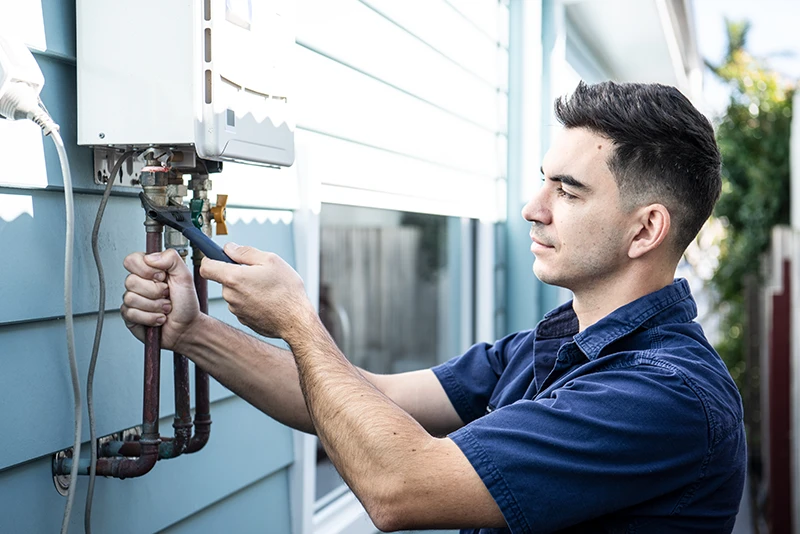
When you’ve got no hot water, you don’t want to be on hold for two days or paying a tradesperson by the hour while they diagnose the problem. I’m Dylan, a licenced local plumber on the Central Coast based in Berkeley Vale, and I run all hot water callouts personally.
Most hot water faults fall into one of a handful of common issues. Here’s what I see most often and what I can usually do about them:
| What’s happening | Likely cause | Typical fix |
|---|---|---|
| No hot water at all | Failed element, thermostat, or pilot light out on gas systems | Element or thermostat replacement, pilot relight, gas valve check |
| Hot water runs out quickly | Sediment buildup, broken dip tube, or undersized unit | Tank flush, dip tube replacement, capacity assessment |
| Water leaking from the unit | Failed seal, corroded tank, or pressure relief valve | Valve replacement if the tank is sound, full replacement if the tank has gone |
| Discoloured or rusty hot water | Sacrificial anode worn out, sediment in tank | Anode replacement, full tank flush |
| Low hot water pressure | Tempering valve blocked, sediment, or PRV failure | Valve service, full flush, pressure test |
| Unusual noises | Sediment hitting the element, expansion noise | Flush and inspect, replace heating element if scaled |
For low pressure that only shows up on the hot side while cold pressure is fine, our troubleshooting guide on how to fix low hot water pressure covers the most common causes you can check yourself before booking a callout.
If your hot water unit is actively leaking and you’d like to check what’s going on before calling, our guide on how to fix a leaking hot water heater walks through the most common leak sources and what’s repairable versus what signals a tank replacement.
If your system is more than 10 years old and showing signs of failure, it’s usually worth comparing repair cost against replacement. Tanks generally last 8 to 12 years and continuous flow units around 15 to 20 years. Once you’re past the warranty period and starting to spend on parts, a new unit often makes more financial sense than the third repair in two years.
I’ll always give you my honest read on whether to repair or replace, with a written quote for both options where it’s a close call.
Hot Water System Replacement and Installation
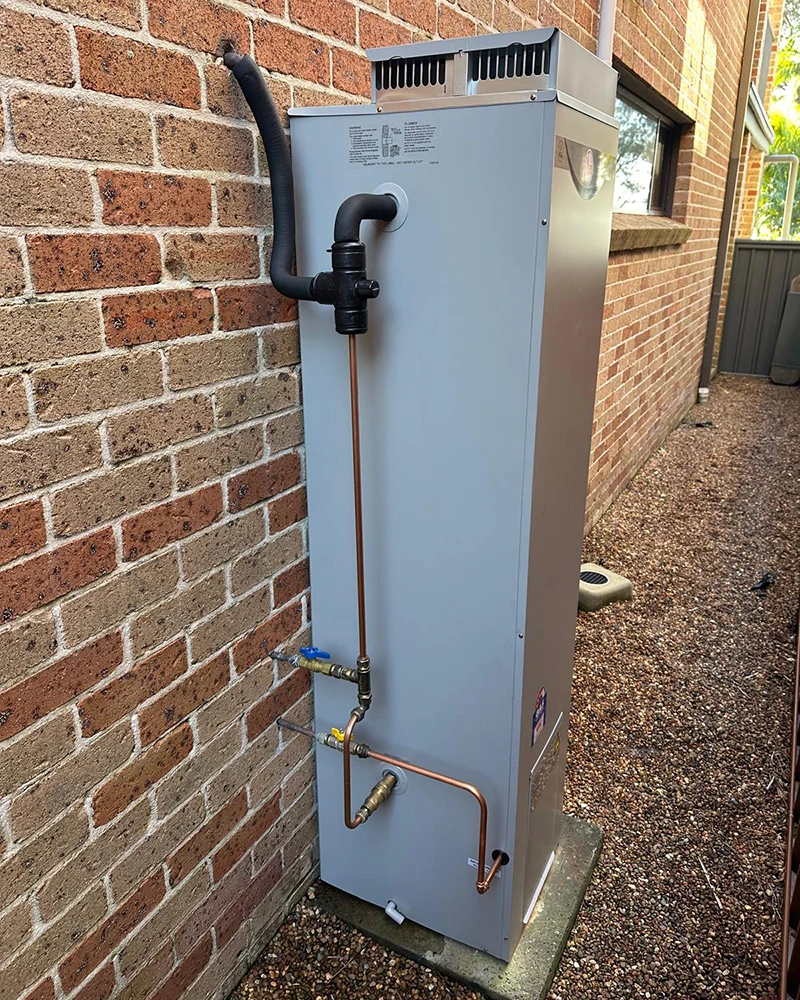
Replacing a hot water system isn’t just swapping like for like. It’s a chance to lower your energy bills for the next decade if you choose the right unit for your household. I can help you weigh up the options, factoring in your existing connections (gas, electric, solar), household size, peak demand, available space, and your budget.
What I cover when I quote a new hot water system:
- Removal and disposal of the old unit
- New unit supply (Australian Standards compliant, in line with AS/NZS 3500)
- All new fittings, valves, and connections
- Tempering valve installation (required by NSW regulations on any new install)
- Compliance certificate
- Testing and commissioning
- Cleanup and rubbish removal
Your Friendly, Licenced Central Coast Plumber
A local tradesman who arrives on time with a smile, takes the stress out of plumbing problems, and delivers reliable plumbing at a fair price for quality workmanship, putting TrueFlow among the best plumbers to call. That’s what you’ll get when you call TrueFlow.

Licenced and Insured
We’re Master Plumbers Association accredited and fully insured. NSW Plumbing Licence 457032C. Every job is completed by a qualified tradesperson to current Australian Standards, giving you complete peace of mind about the quality and safety of our work.

Seniors Discounts
We’re grateful for the support of our local community, and we’re happy to offer 10% discounts to all valid Senior Card holders across the Central Coast.
Hot Water System Types Explained
Choosing the right system comes down to your existing connections, household size, and how much you want to spend now versus over the next 10 to 15 years.
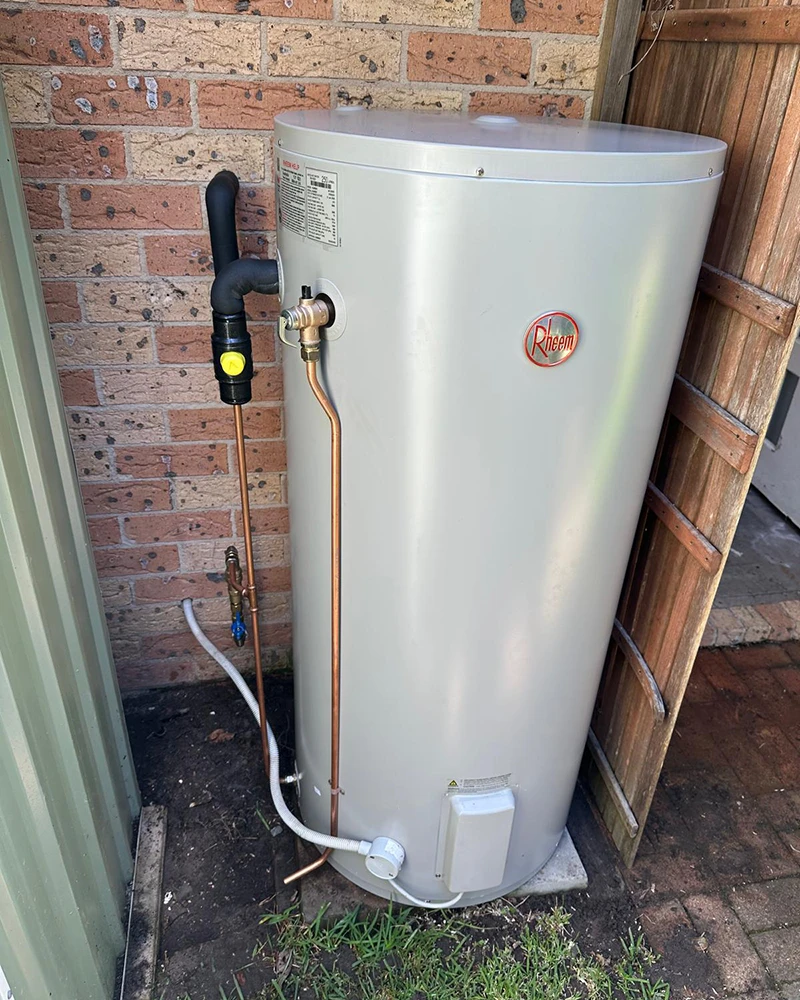
Electric Storage Hot Water Systems
The most common system in older Central Coast homes. Electric storage units are reliable, simple to install, and have the lowest upfront cost. The trade-off is running cost, particularly if you’re on a continuous tariff rather than off-peak. If your home has off-peak metering (Tariff 31 or 33), an electric storage unit can still be a sensible choice. Read more about how off-peak hot water works and whether it suits your household.
Typical lifespan: 8 to 12 years. Indicative installed cost: $1,400 to $2,800.
Gas Storage Hot Water Systems
Faster heat recovery than electric, lower running cost where you have natural gas, and a familiar option for most Central Coast households on the gas network. Continuous gas pilot models are being phased out in favour of electronic ignition, which is more efficient.
Typical lifespan: 8 to 12 years. Indicative installed cost: $1,800 to $3,200.
Gas Continuous Flow Hot Water Systems
Sometimes called tankless or instantaneous, these heat water on demand. There’s no tank to corrode, no standby heat loss, and you can’t run out of hot water. They suit households where peak demand is staggered and where space is tight. Pair them with a properly sized tempering valve to keep delivery temperatures safe and consistent. I’ve written more on how continuous flow hot water systems work if you want the technical detail.
Typical lifespan: 15 to 20 years. Indicative installed cost: $1,900 to $3,800.
Solar Hot Water Systems
The Central Coast gets enough sun to make solar hot water genuinely cost-effective, particularly for larger households. A solar setup uses roof-mounted panels to preheat water in a storage tank, with gas or electric boosting for cloudy days and overnight demand. Upfront cost is the biggest hurdle, but federal Small-scale Technology Certificates (STCs) reduce that cost at point of sale.
Typical lifespan: 15 to 20 years. Indicative installed cost: $4,000 to $7,500 after STC discount.
Heat Pump Hot Water Systems
Heat pumps are the fastest-growing category in Australia and for good reason. They use the same technology as a reverse-cycle air conditioner to extract heat from the surrounding air and warm your water, using around a quarter of the electricity of a traditional electric storage unit. NSW rebates can bring the upfront cost down significantly. More on heat pumps below.
Typical lifespan: 10 to 15 years. Indicative installed cost: $3,800 to $6,500 before NSW rebates.
If you’re stuck between options, the guide on gas vs electric hot water systems walks through the running cost comparison for each.
Hot Water Brands We Service
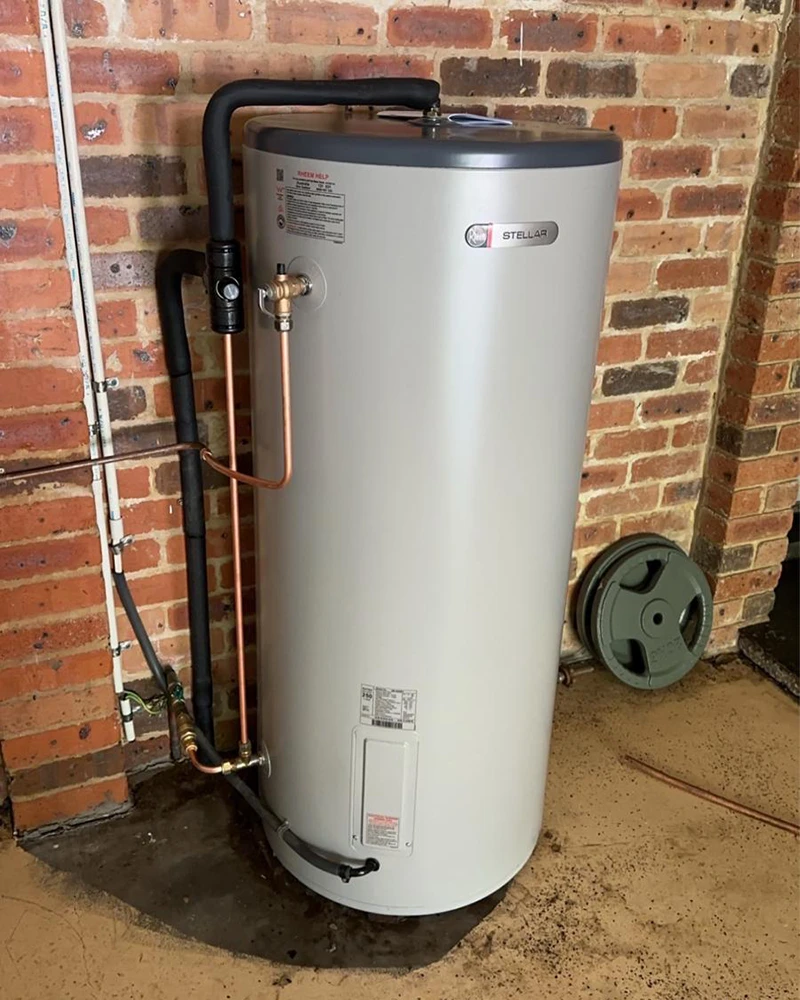
I’m not aligned with any single manufacturer, so the advice I give is always on what’s best for your home rather than what I’m contracted to sell. I install, repair, and service all major brands available in Australia, including:
Storage tanks (electric and gas): Rheem, Dux, Vulcan, AquaMAX, Thermann, Bosch
Continuous flow: Rinnai Infinity, Bosch Highflow, Rheem Metro, Dux, Thermann
Heat pumps: Sanden, Stiebel Eltron, iStore, Reclaim Energy, Rheem Ambiheat, Thermann
Solar: Solahart, Rheem Loline, Edwards, Apricus
If your system is under warranty, I can liaise directly with the manufacturer on your behalf and get the warranty replacement or repair processed without you having to chase paperwork.
NSW Hot Water Rebates and Incentives
If you’re replacing an old electric hot water system with a heat pump or solar unit, you may be eligible for rebates that significantly reduce the upfront cost. The two main schemes in NSW are:
- NSW Energy Savings Scheme (ESS) and Peak Demand Reduction Scheme (PDRS) — point-of-sale discounts on eligible heat pump installations
- Federal Small-scale Technology Certificates (STCs) — applied to eligible solar and heat pump systems at point of sale
The rebate amount depends on the system, your zone, and the model installed. For most Central Coast households replacing an old electric storage unit with a quality heat pump, the combined rebate can knock $1,000 to $2,000 off the installed price.
I’ll work out which rebates apply to your situation when I quote and handle the paperwork end to end so the discount is applied at the till, not chased afterwards.







Frequently Asked Questions
How much does a new hot water system cost on the Central Coast?
Installed pricing on the Central Coast typically ranges from $1,400 for a basic electric storage replacement up to $7,500 for a full solar hot water installation. Gas storage units sit between $1,800 and $3,200 installed, continuous flow gas runs $1,900 to $3,800, and heat pumps cost $3,800 to $6,500 before NSW rebates are applied. Your actual quote depends on system type, capacity, brand, and any modifications needed to existing pipework or electrical. Call Dylan on 0411 438 760 for a same-day written quote.
How long does it take to install a new hot water system?
A like-for-like hot water replacement usually takes three to four hours, including removing the old unit, fitting the new one, installing or testing the tempering valve, and commissioning. If you’re changing system type, for example moving from electric storage to a heat pump, allow four to six hours. Most replacements are completed the same day I arrive on site.
How long do hot water systems last?
Electric and gas storage tanks last 8 to 12 years on average. Continuous flow gas units last 15 to 20 years. Solar hot water systems last 15 to 20 years for the tank and panels, with the booster element needing replacement once or twice over that life. Heat pumps last 10 to 15 years. Regular hot water anode replacement extends storage tank life significantly and is one of the cheapest pieces of preventive maintenance you can do on a storage system.
Do I need council approval to replace a hot water system?
No council approval is required for a like-for-like hot water replacement in NSW. However, any new installation or system change must be carried out by a licenced plumber (and a licenced gas fitter for gas systems) and a compliance certificate must be issued. I cover both licences (NSW Plumbing Licence 457032C) and provide the certificate as part of every job.
Do you service my suburb?
Yes. TrueFlow services the full Central Coast Council region including Avoca Beach, Bateau Bay, Berkeley Vale, Blue Haven, Chittaway Bay, Gosford, Ourimbah, Terrigal, The Entrance, Toukley, Tuggerah, Tumbi Umbi, Umina Beach, Wyong, and surrounding suburbs. Berkeley Vale is my base, so response times across the Central Coast are typically same-day.