
I get asked this question all the time, usually from homeowners on the Central Coast who’ve just read something about chlorine or fluoride in their tap water and want a quick fix.
So let me give you the straight answer upfront.
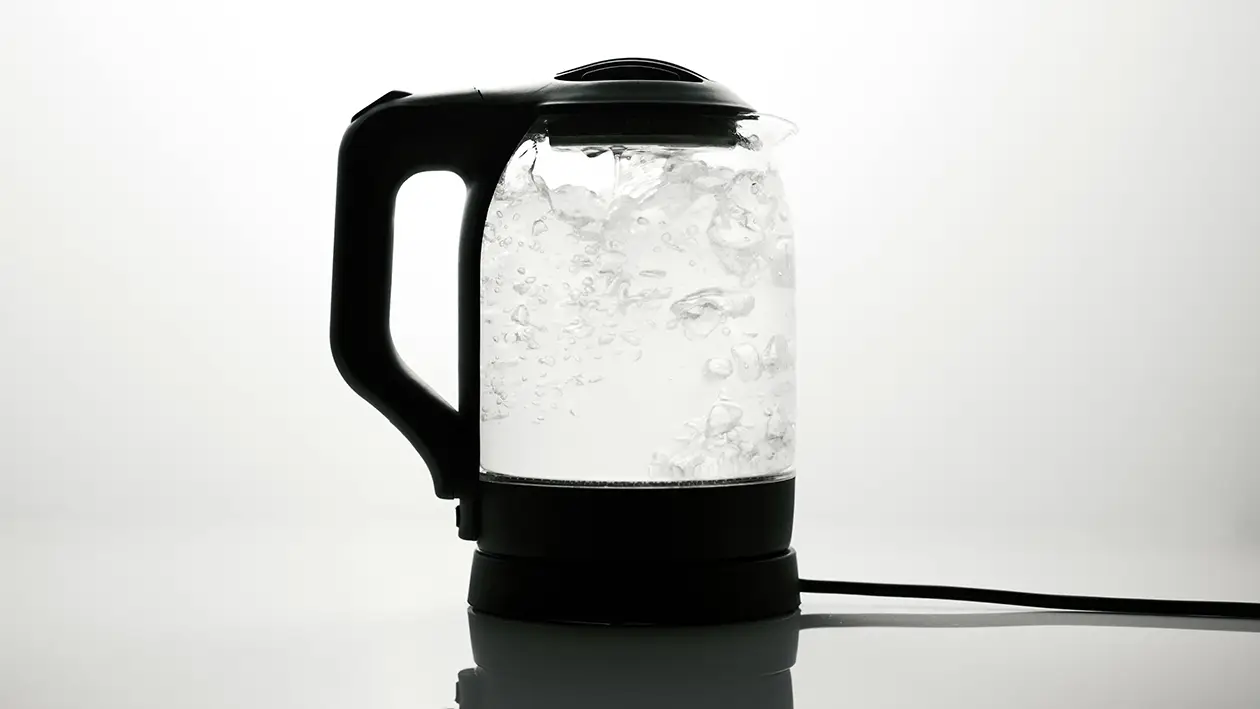
Boiling water is 100% effective at killing biological pathogens like bacteria, viruses, and parasites. It also removes chlorine, which turns to gas and evaporates during boiling. But boiling does not remove fluoride, lead, microplastics, or PFAS. And here’s the part most people miss: boiling actually concentrates these chemicals in the water that’s left behind.
If your concern is biological contamination (like during a boil-water advisory), boiling is exactly the right call. If your concern is chemical contaminants like fluoride or heavy metals, you need a water filter, not a kettle.
Below, I’ve put together a complete breakdown of what boiling removes, what it leaves behind, the correct way to boil water for safety, and when you’re better off with filtration instead.
What Does Boiling Water Actually Remove? (The Kill vs. Keep Matrix)
The simplest way to think about it: boiling is for biology, filtering is for chemistry.
Here’s exactly what happens when you bring your water to a rolling boil.
Destroyed by Boiling (100% Effective)
Every biological pathogen in your water is killed at 100°C. This includes:
- Bacteria such as E. coli, Salmonella, Legionella, and Campylobacter
- Viruses such as Hepatitis A, Rotavirus, and Norovirus
- Parasites such as Giardia and Cryptosporidium
These organisms cannot survive at boiling temperature. One minute at a rolling boil and they’re completely eliminated. This is why NSW Health and other authorities issue boil-water advisories after main breaks or flooding. It works.
This is backed by the World Health Organisation’s technical brief on boiling water (2015), which found that enteric bacteria, protozoa, and viruses are all sensitive to heat inactivation at temperatures below 100°C, with rapid kills achieved at temperatures above 65°C.
Removed by Boiling (Evaporates)
Chlorine is a dissolved gas, and boiling forces it out of the water. If you boil tap water for 15 to 20 minutes, virtually all free chlorine will evaporate. You’ll notice the smell and taste disappear.
This is useful to know if you’re preparing water for fish tanks, home brewing, or watering sensitive plants. Chlorine can harm aquatic life and some plant species.
Important distinction: Most water utilities in Australia, including Central Coast Council’s supply, treat water with chloramine (chlorine bonded to ammonia), not free chlorine. Chloramine is far more stable and does not evaporate through boiling. If your water is treated with chloramine, boiling won’t remove it. You’ll need an activated carbon filter or a reverse osmosis system.
NOT Removed by Boiling (Left Behind and Concentrated)
This is where people get caught out. These contaminants stay in the water no matter how long you boil it:
- Fluoride is added to most Australian water supplies at approximately 0.6–1.0 mg/L. Boiling does not remove it. It concentrates it.
- Lead can leach from older pipes and fittings. Boiling concentrates it further.
- PFAS (forever chemicals) are synthetic chemicals that don’t break down. Boiling has zero effect.
- Microplastics are tiny plastic particles found in most tap water worldwide. Boiling doesn’t remove them.
- Arsenic occurs naturally in some groundwater. Concentrated by boiling.
- Chloramines are the disinfectant used in most Australian municipal water. Stable through boiling.
- Nitrates are common in agricultural areas. Concentrated by boiling.
The science behind this is straightforward. When you boil a litre of water and 10% evaporates as steam, you’re left with 900 mL of water, but 100% of the dissolved chemicals are still there. Everything that was in a litre is now packed into 900 mL. The concentration goes up, not down.
When to Boil vs. When to Filter
Boil your water when:
- There’s a boil-water advisory from your local council or water authority
- You’re camping or bushwalking and sourcing water from creeks or dams
- You need to prepare safe water for baby formula in an emergency (using water from a safe municipal supply)
- You want to remove chlorine taste for cooking
Filter your water when:
- You want to remove fluoride from your daily drinking water
- You’re concerned about lead, PFAS, or heavy metals in older homes
- You want to improve the taste and odour of your tap water every day
- You want chloramine removed (which boiling won’t touch)
If you’re not sure which type of filter suits your home, I’ve written a guide on water filtration system benefits that covers the main options.
How to Properly Boil Water for Biological Safety
If you do need to boil water during an advisory, while camping, or in any situation where biological contamination is a risk, here’s the correct way to do it.
Step 1: Filter Solids First
If the water is cloudy or has visible sediment (common with creek water or after a main break), pour it through a clean cloth, a coffee filter, or a fine mesh strainer first. This removes the larger particles that can shield bacteria from the heat.
Step 2: Bring to a Rolling Boil
You need a rolling boil, where large bubbles aggressively break the surface. Not just a few small bubbles forming on the bottom of the pot. A rolling boil confirms the water has reached 100°C throughout.
A gentle simmer (around 80–90°C) is not enough to guarantee all pathogens are killed, particularly Cryptosporidium, which is more heat-resistant than most bacteria.
Step 3: Start the Timer
For anywhere on the Central Coast (and virtually all of coastal Australia), one full minute at a rolling boil is sufficient. This is the guideline from the World Health Organisation and is endorsed by NSW Health.
The three-minute rule you might see online applies to elevations above 2,000 metres, where water boils at a lower temperature. Unless you’re boiling water in the Snowy Mountains, one minute is the standard.
Step 4: Cool Naturally
Let the water cool on the benchtop with the lid on. Don’t add ice to speed up cooling because the ice itself could be made from contaminated water. Don’t transfer it into a container that hasn’t been cleaned. Once cool, you can store it in a clean, covered container.
Common Mistakes
Re-boiling water repeatedly. This is biologically safe. Reboiling doesn’t make pathogens come back. But each time you boil, more water evaporates as steam and any dissolved chemicals (lead, fluoride, nitrates) become more concentrated in what’s left. If you’re concerned about chemical contaminants, avoid reboiling.
Confusing simmering with boiling. If you can’t see large, rolling bubbles, you’re not at 100°C. Simmering at 70–80°C will kill most bacteria given enough time, but it won’t reliably eliminate Cryptosporidium or some heat-resistant viruses. A rolling boil removes the guesswork.
How to Remove Chlorine from Tap Water (Fastest vs. Easiest Methods)
If your goal is specifically to get chlorine out of your water, whether for taste, for fish, for brewing, or for plants, you’ve got three options depending on how quickly you need the water.
Method 1: Boiling (Fastest, 15 to 20 Minutes)
Bring the water to a rolling boil and keep it there for 15 to 20 minutes with the lid off. The chlorine converts to gas and escapes into the air. Make sure your kitchen is well ventilated.
Best for: Small quantities needed quickly, like cooking water or a single batch for brewing.
Limitation: Only works for free chlorine. If your water supplier uses chloramine (as most Australian utilities do), boiling won’t remove it.
Method 2: Off-Gassing (Easiest, 24 Hours)
Fill a wide-mouth container (a jug, bucket, or watering can) and leave it uncovered at room temperature for 24 hours. Free chlorine will naturally dissipate into the air.
Best for: Preparing water for fish tanks, aquariums, or garden watering. Zero energy cost.
Limitation: Again, only works for free chlorine, not chloramine. And 24 hours is a long time to wait if you need water now.
Quick tip for gardeners: Fill your watering can tonight and leave it on the bench. By tomorrow morning, it’s chlorine-free and ready for your plants. No boiling, no filter, no cost.
Method 3: Filtration (Most Effective, Instant)
An activated carbon filter, whether it’s a benchtop jug, an under-sink system, or a whole-house unit, removes both chlorine and chloramine on contact. Water goes in, filtered water comes out immediately.
This is the only method that handles chloramine, and it’s the most practical option for daily drinking water. A quality under-sink activated carbon filter will also improve taste, remove sediment, and reduce a range of other contaminants depending on the filter grade.
If you’d like a filter installed at your place, give me a call on 0411 438 760. I install under-sink and whole-house filtration systems across the Central Coast and can talk you through the best option for your home.
When Boiling Makes Things Worse: What Boiling Leaves Behind
This is the section most people need to read, because it’s the part that’s most commonly misunderstood.
The Concentration Effect
When you boil water, you’re converting liquid water into steam. The steam leaves the pot. But the dissolved chemicals (fluoride, lead, arsenic, PFAS, nitrates) don’t turn into gas. They stay behind in the remaining water.
Think of it like reducing a sauce on the stove. As the liquid boils off, the flavour gets more intense because the same amount of salt and seasoning is now dissolved in less liquid. The exact same thing happens with chemical contaminants in your water.
A 2022 study published in the Journal of Hazardous Materials confirmed this effect. Researchers found that fluoride accumulation in food and water increased significantly when the temperature was raised to 100°C, and that infants consuming foods prepared with fluoride-containing boiled water had a disproportionately higher fluoride intake relative to body weight compared to adults.
If you start with a litre of water containing 0.8 mg/L of fluoride (a typical level in Central Coast tap water) and boil off 20% of the volume, you now have 800 mL of water containing the same total fluoride. That means the concentration has increased to approximately 1.0 mg/L.
The longer you boil, the worse it gets.
Does Boiling Water Remove Fluoride?
No. Boiling water does not remove fluoride. Fluoride is a dissolved mineral (not a gas), so it remains in the water while the water itself evaporates. Boiling concentrates fluoride rather than removing it.
The only effective methods for removing fluoride from drinking water are:
- Reverse osmosis (RO) removes 90–95% of fluoride. This is the most effective option for homes. I’ve covered how these systems work in my reverse osmosis guide.
- Distillation removes fluoride by boiling water and collecting the steam (leaving contaminants behind). Effective but slow and energy-intensive for household use.
- Activated alumina filters are a specialised filter media designed specifically for fluoride removal.
Standard activated carbon filters (like jug-style filters) do not remove fluoride. If fluoride removal is your goal, you need an RO system or a filter specifically rated for fluoride reduction.
What Should You Do?
Is your concern bacteria or viruses? Boil it. One minute at a rolling boil. Problem solved.
Is your concern chlorine taste or smell? Let the water sit uncovered for 24 hours, or boil it for 15–20 minutes. Or install an activated carbon filter for an instant, ongoing fix.
Is your concern fluoride, lead, PFAS, or heavy metals? Do not boil. Install a reverse osmosis system or an appropriate water filter. Boiling will make the concentration worse.
Need a Water Filter Installed on the Central Coast?
If you’ve read this far, you probably want more than just a kettle solution. I install under-sink, benchtop, and whole-house water filtration systems right across the Central Coast, from Gosford to Wyong, The Entrance to Umina Beach.
Every install comes with upfront, per-job pricing (no hourly rates) and a Lifetime Labour Guarantee. I’ll walk you through exactly which system matches what you’re trying to remove from your water.
Call Dylan on 0411 438 760 or request a free quote online to chat about the right filter for your home.